

Blog
Decision Intelligence insights, structured thinking frameworks, and best practices for organizations that take their decisions seriously.
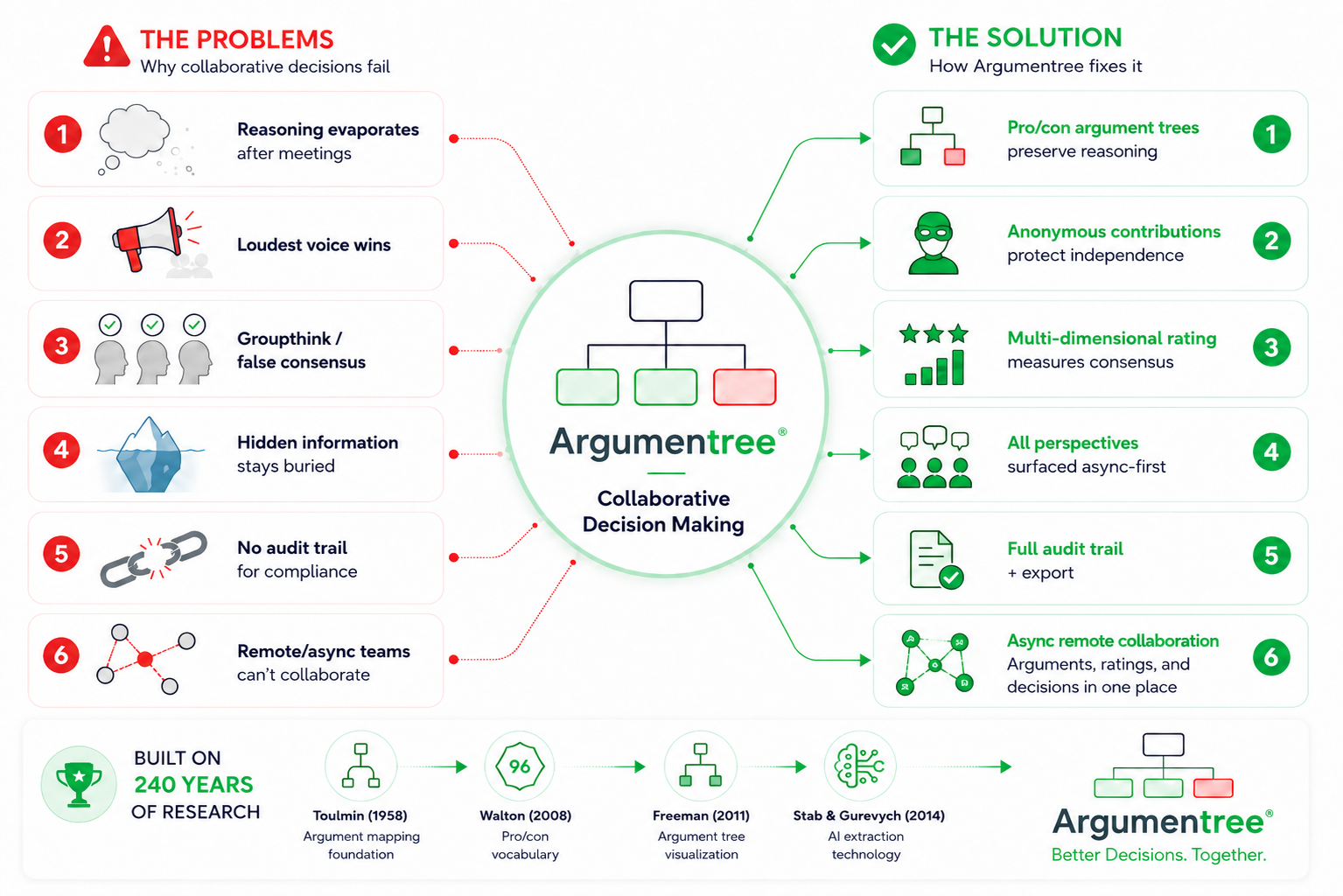
Collaborative Decision Making: 240 Years of Proof That Groups Beat Individuals
In 1785, Condorcet proved mathematically that groups outperform individuals when perspectives are properly aggregated. Google's Project Aristotle confirmed it: psychological safety predicts team effectiveness better than who's on the team. Here's what the science says — and when NOT to collaborate.
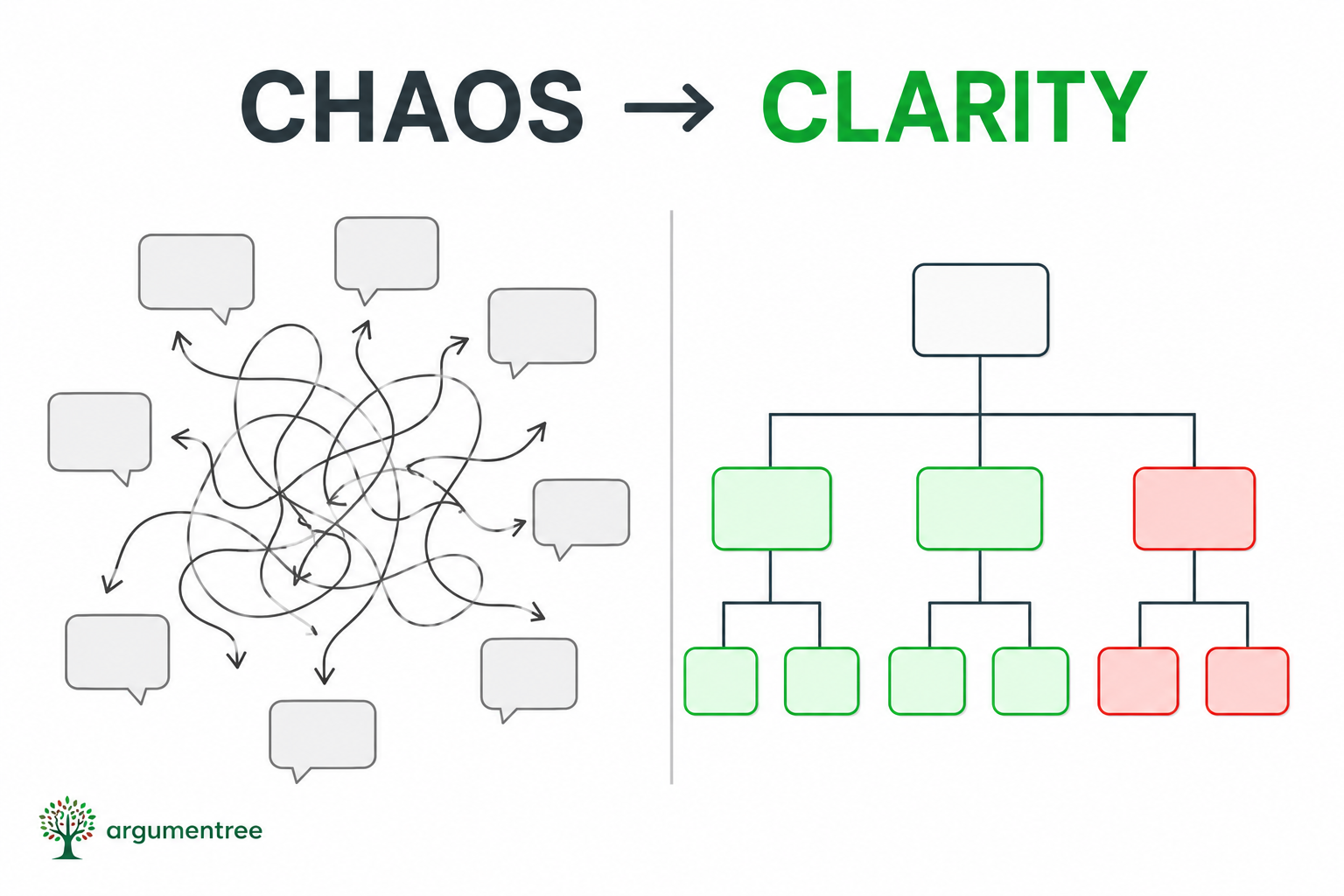
The Meeting Intelligence Revolution: Turning Meetings Into Traceable Decisions
Tired of meetings where people talk without saying anything? Learn how to transform wasted meeting time into focused, efficient decisions with pre-meeting argument preparation, real-time rating, and full decision traceability — grounded in the published research on meeting waste.
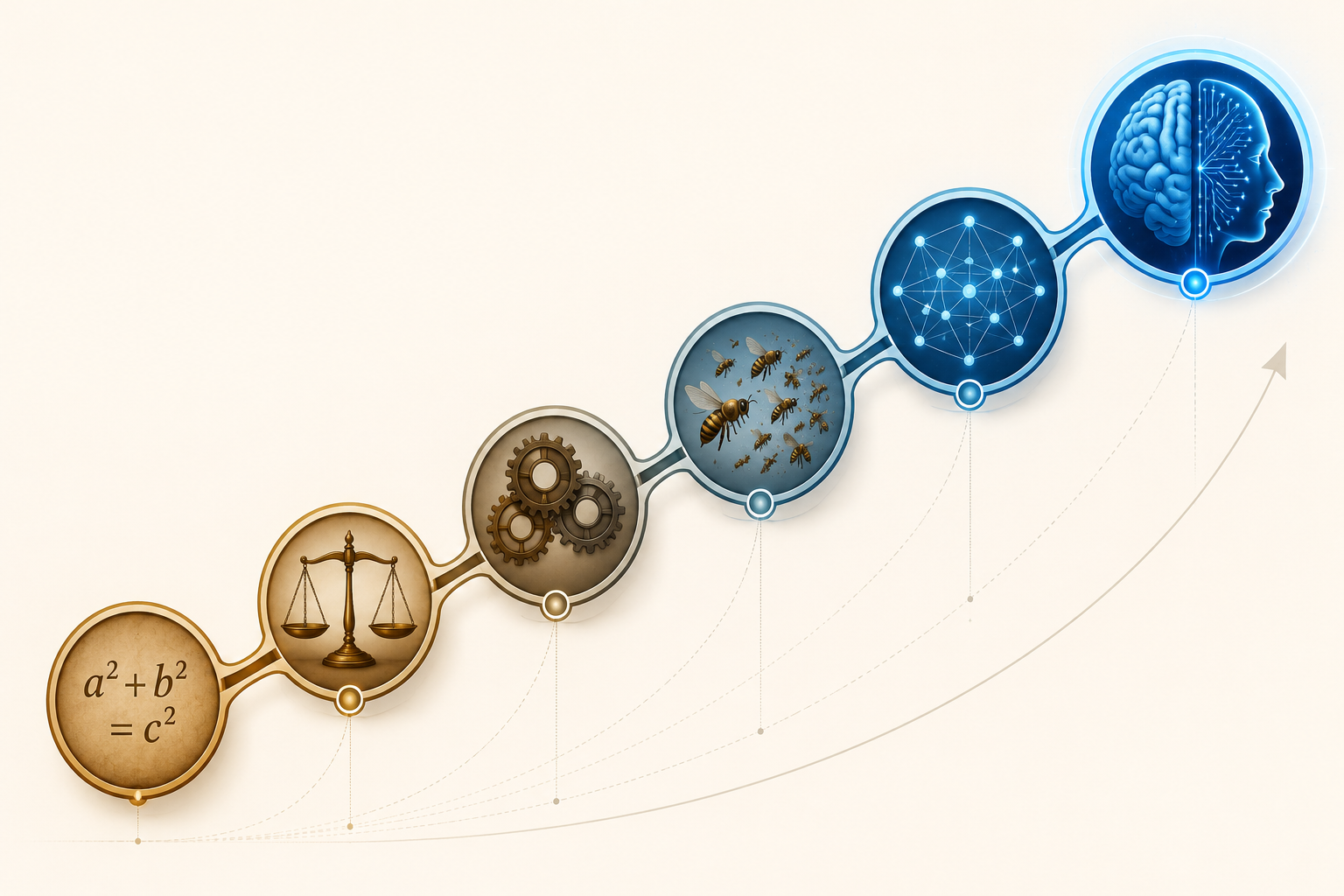
Collective Intelligence: 240 Years of Research — From Condorcet to AI
From an 18th-century French mathematician to MIT AI labs, the science of group intelligence has evolved through six eras. Here's the complete history.

Diversity Beats Ability: Why Your Smartest Hire Isn't Your Best Decision-Maker
Research shows teams of diverse thinkers outperform teams of high-IQ experts. Here's the science—and why it's more nuanced than the headlines suggest.
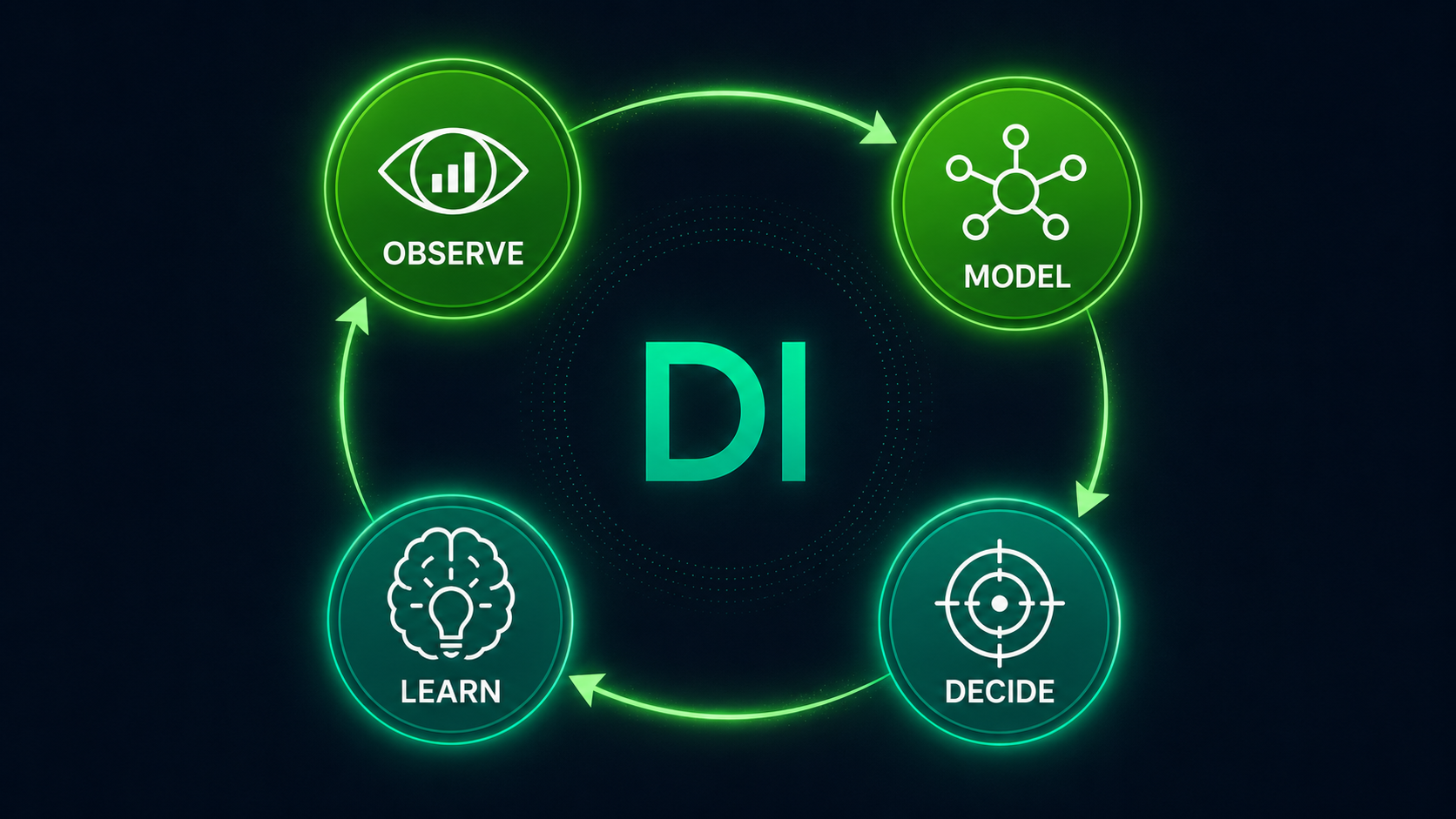
Decision Intelligence: From Data to Action at Enterprise Scale
In 2018, Google created a new job title: Chief Decision Scientist. Why? Because having data isn't the same as using data well. Decision Intelligence — coined by Lorien Pratt, operationalized by Cassie Kozyrkov — closes the gap between insight and impact. Here's the framework behind the $68B market.

Jeff Bezos's 3 Decisions a Day: The Warren Buffett Method Behind Amazon
In 2018, Jeff Bezos revealed his decision-making philosophy: "You get paid to make a small number of high-quality decisions." He credits Warren Buffett's approach. Here's the full interview, the 10am rule, and why "gut decisions" aren't what you think.
Warren Buffett's Decision Philosophy: The 20-Slot Punch Card That Built $900 Billion
Jeff Bezos credits Warren Buffett for his decision philosophy. But what does Buffett himself actually say? His 20-slot punch card rule, Ted Williams sweet spot analogy, "lethargy bordering on sloth," and why he reads 500 pages a day. The real philosophy behind $900 billion.
Elon Musk's $100 Million Decision Hour: The Lex Fridman Clip Every CEO Should See
In a recent Lex Fridman conversation, Elon Musk did the math out loud: "The marginal value of a good decision can easily be, in the course of an hour, a hundred million dollars." Bezos counts decisions per day. Buffett reads 500 pages to prepare. Musk prices the hour. Here's why the number isn't bravado—and what it means for every organization at every scale.

Steve Jobs Fired Board Members for Agreeing With Him: The Unusual Truth About Pixar's Board
During Pixar's decade as a public company, Steve Jobs removed two board members—not for incompetence, but because they never disagreed with him. Ed Catmull's firsthand account: the arenas of disagreement, the Toy Story 2 reboot, the rock tumbler metaphor, and why the "reality distortion field" caricature misses how Jobs actually decided.
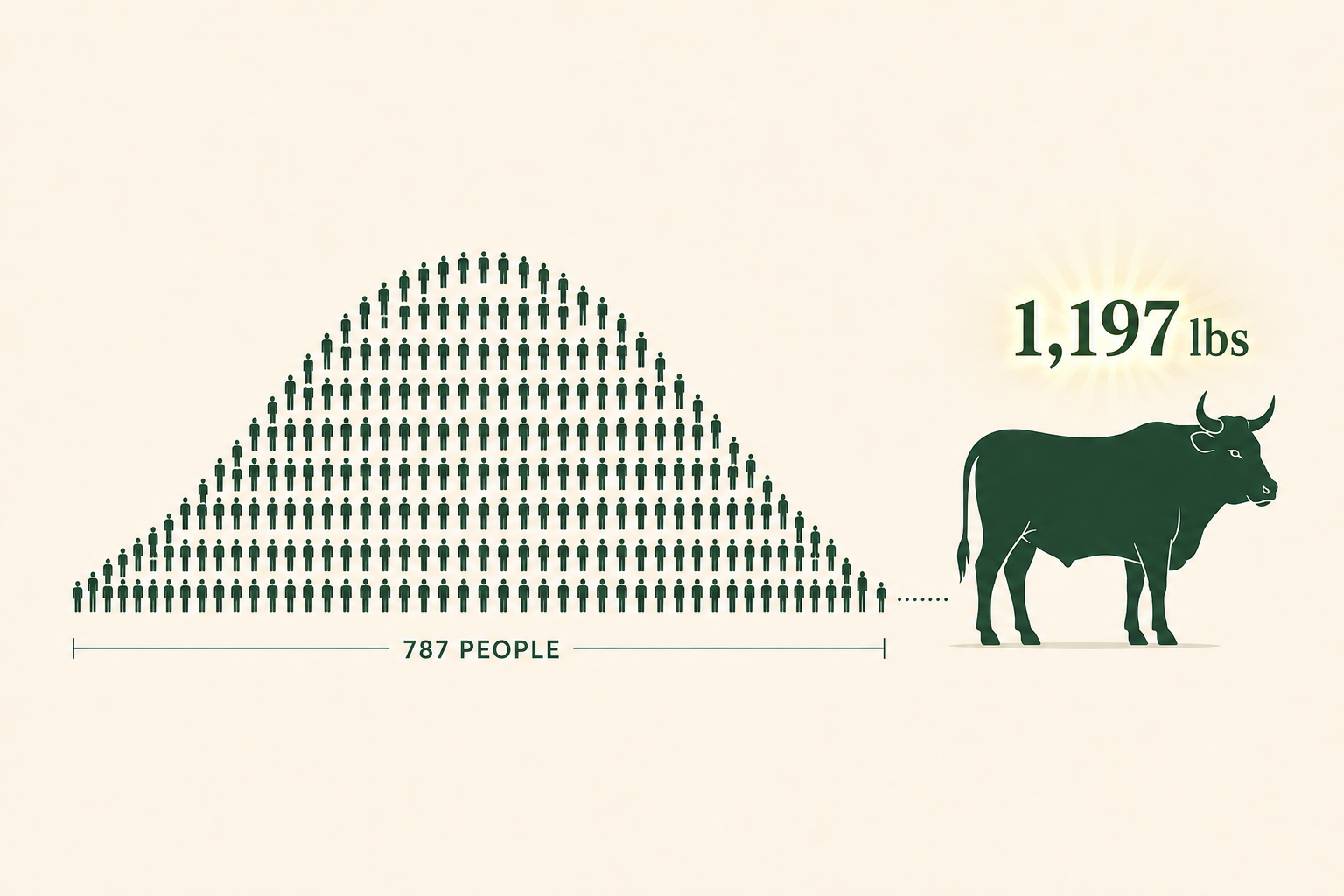
Wisdom of Crowds: Galton's Ox — The 1906 Experiment That Proved Crowds Beat Experts
Francis Galton went to a country fair expecting to prove the average voter hopeless. Instead, the median of 787 guesses at an ox's dressed weight landed within 1% of the truth — better than the cattle experts. The full story of the experiment that founded the wisdom of crowds: the methodology, the statistics, the caveats, and what it means for how teams decide today.
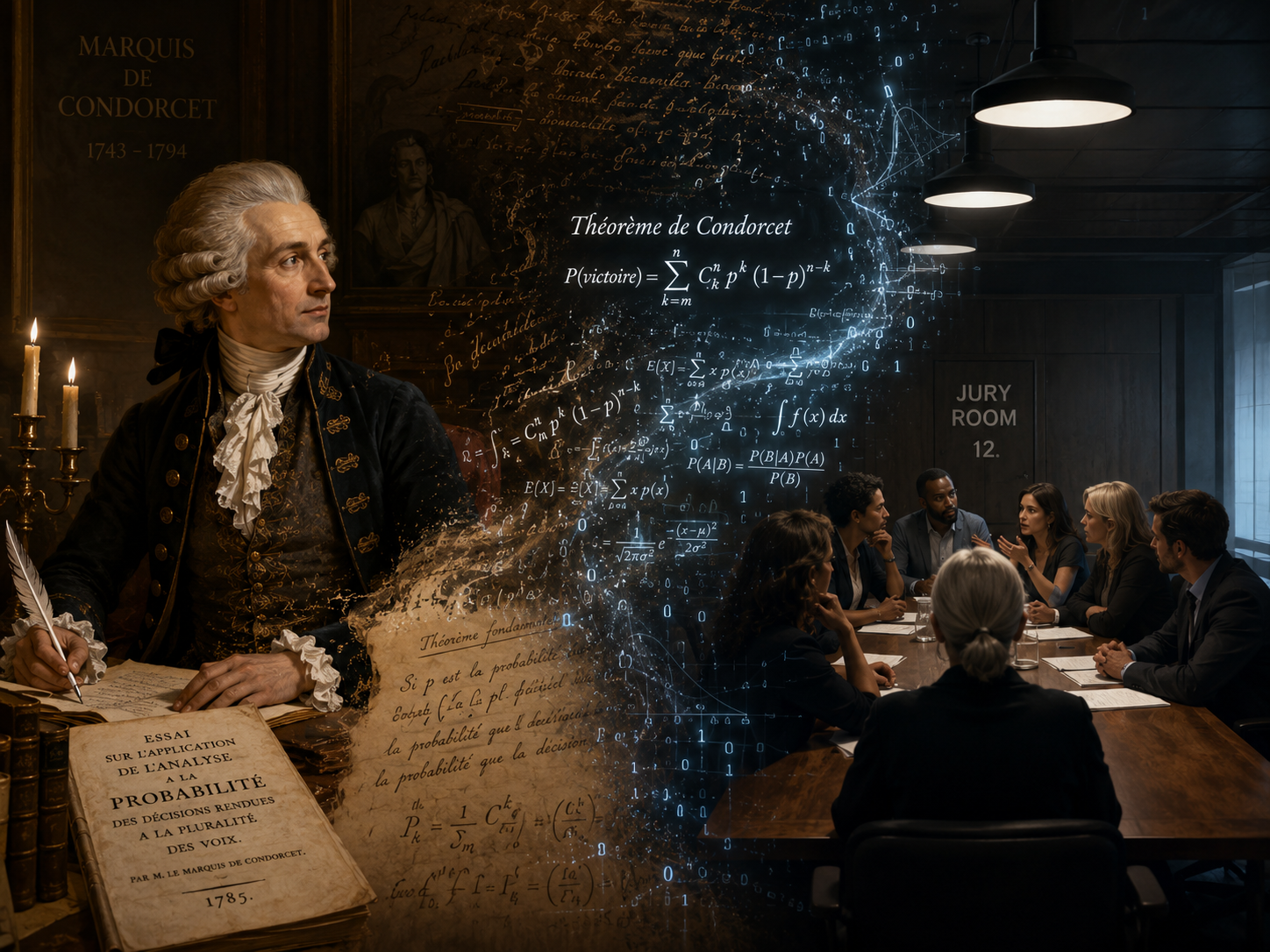
The Condorcet Jury Theorem: The 240-Year-Old Math Behind Better Decisions
In 1785, a French mathematician proved that majorities are almost always right—if each voter is more likely right than wrong. The theorem now powers ensemble AI.

When Crowds Go Wrong: Bubbles, Cascades, and the Madness of Herds
The same crowd dynamics that produce wisdom can produce madness. From tulip mania to Twitter mobs, here's the science of collective failure—and how to prevent it.

The Steel Man: Why the Best Negotiators Argue Against Themselves First
In 2013, Warren Buffett invited a short-seller betting against Berkshire on stage at his own annual meeting—to make the strongest case against him. That's steelmanning. Rapoport's rules, moot courts, McKinsey red teams, the real research—and the trap that makes performed devil's advocacy backfire.

How McKinsey, Bridgewater, and Amazon Turn Disagreement Into Decisions (The Protocol)
Bezos greenlit a show he didn't believe in with six words: "I disagree and commit"—and hoped it would succeed. McKinsey's obligation to dissent, Bridgewater's believability weighting, Amazon's 6-pager: the five structural elements all three share, and how to implement them in your next meeting.

Ready to Transform Your Decision-Making?
Join hundreds of organizations using Argumentree to structure arguments, track decisions, and build institutional knowledge.
Start Free 14-Day Trial