
Why Smart People Make Dumb Decisions | Argumentree
Intelligence and good judgment are different skills, and in three specific ways being smart can make decisions worse rather than better. The first is that intelligence powers better rationalization. When a person wants to believe something the mind works backward, starting at the conclusion and constructing a case for it, a process psychologists call motivated reasoning. The more capable the reasoner, the more convincing the resulting defense, so a brilliant mind attached to a bad idea can build a defense a less clever person could never have managed. Intelligence therefore helps a person avoid the truth more effectively, not only find it. The second is the expertise trap. Expertise is pattern recognition, which is usually a superpower, but its failure mode is that experts stop looking: they match patterns so quickly that they skip the step of asking whether this is actually the situation it appears to be. That is why seasoned professionals sometimes miss what a curious beginner catches, since the beginner is still looking while the expert is recognizing, and recognition is exactly what fails when something genuinely novel appears. The third and most fixable trap is the belief that one is too smart to need a process, so the checklist, the second opinion and the structured comparison get skipped until a problem is complex enough that raw ability is insufficient. The remedy is not more intelligence but the two things intelligence erodes: humility and process.
Why Smart People Make Dumb Decisions
Intelligence is not the same as good judgment. Sometimes it's the very thing that gets in the way.
We assume it almost automatically: smart people make smart decisions.
Then we watch a brilliant colleague torch a project, a genius founder drive a company into the ground, or a Nobel-caliber mind fall for an obvious scam — and we're baffled.
We shouldn't be. Intelligence and good judgment are different skills. And in a few specific ways, being smart can make your decisions worse, not better.
Smartness powers better excuses
Here's the uncomfortable mechanism.
When you want to believe something, your brain works backward — it starts at the conclusion and builds a case for it. Psychologists call it motivated reasoning.
Now: who's better at building a convincing case? The smart person. Intelligence is a more powerful engine for rationalization. Give a brilliant mind a bad idea it's emotionally attached to, and it will construct a brilliant defense of it — one a less clever person could never have managed.
Your intelligence doesn't only help you find the truth. It also helps you avoid it, more convincingly.
The expertise trap
Expertise is pattern recognition — you've seen this a thousand times, so you know what to do. Most of the time that's a superpower.
But it has a failure mode: experts stop looking. They pattern-match so fast that they skip the step where they ask "is this actually the situation I think it is?" The very experience that makes them efficient makes them blind to the case that doesn't fit the pattern.
This is why seasoned professionals sometimes miss what a curious beginner catches. The beginner is still looking. The expert is recognizing — and recognition is exactly what fails when something genuinely new shows up.
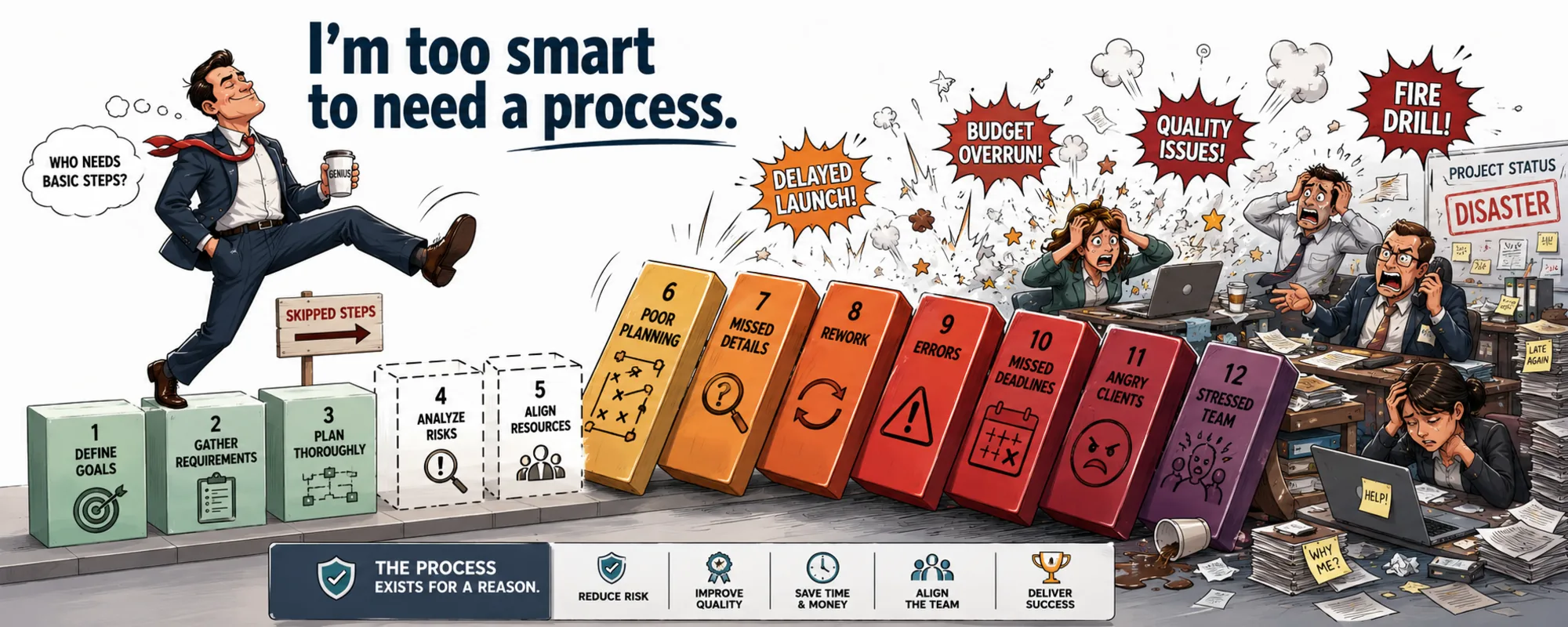
"I'm too smart to need a process"
The third trap is the most common, and the most fixable.
Smart people trust their own minds — reasonably; it's worked so far. So they skip the boring stuff: the checklist, the second opinion, the structured pro/con, the "let me sleep on it." They wing it, because winging it has mostly worked.
Until the day the problem is just complex enough, or their ego just invested enough, that raw brainpower isn't sufficient — and the structure they skipped was exactly what would have caught the error.
Pilots and surgeons — some of the smartest, most capable people alive — learned this the hard way. Their breakthrough wasn't getting smarter. It was the checklist: the humility to follow a process even when you're sure you don't need it.
The actual fix
The cure for smart-people mistakes isn't more intelligence. It's the two things intelligence quietly erodes:
- ✓Humility — assuming you could be the one who's wrong, especially when you're certain.
- ✓Process — using structure even when your brain insists it's unnecessary, because that's precisely when you're most exposed.
The smartest thing a smart person can do is build in the external check their own brilliance tells them they don't need. Strong thinkers seek out the disagreement, the checklist, the person who'll tell them no — not because they're insecure, but because they understand the specific way intelligence fails. It is the individual version of the problem smart teams have collectively.
So: think of the smartest person you know who made a genuinely terrible decision. Which trap was it — the great rationalization, the expert blind spot, or skipping the process they were "too good" for? The pattern is almost always one of the three.
Build in the check you think you don't need
Argumentree is the structure smart people skip: options laid out, arguments weighed on merit, and a record you can be wrong in front of.
Start Free 14-Day Trial →