
The Cognitive Bias That Destroyed Kodak | Argumentree
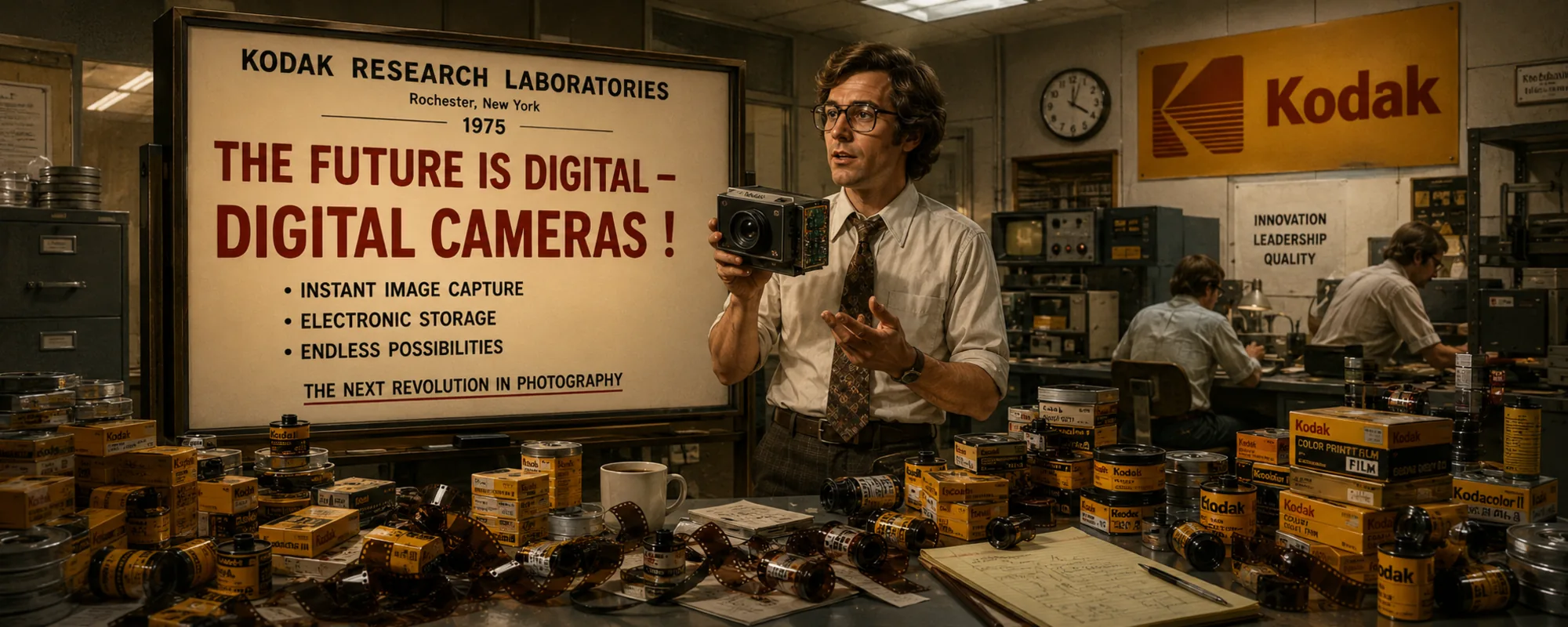
In 1975 a Kodak engineer named Steven Sasson built the first digital camera. It was the size of a toaster and took twenty-three seconds to capture a single black-and-white image. Management's response was essentially that it was interesting but should not be publicised, because it did not use film. Thirty-seven years later, in 2012, Kodak filed for bankruptcy, undone by the technology it had invented and shelved. Two biases combined to produce that outcome. Sunk cost: Kodak had invested billions and a century of identity in film, so walking away felt like discarding all of it, even though what had already been spent was gone regardless. Status quo bias: film was enormously profitable at the time and digital threatened to cannibalise it, so each year the apparently rational move was to protect the cash machine and slow-walk the disruption. Individually each year's decision looked defensible; across decades the sequence was fatal, which is how these biases operate — not through one dramatic blunder but through a long series of reasonable-sounding not-yets. The organisational dimension matters more than the individual one. The people running the film business held the power and digital threatened them personally, nobody was rewarded for proposing the destruction of the most profitable division, and the disruptive case had no structured venue in which it could be made and won. The right argument existed inside Kodak for decades with no mechanism to let it prevail.
The Cognitive Bias That Destroyed Kodak
Kodak invented the digital camera. Then it spent 30 years deciding not to sell it. Here's the trap that killed a giant.
In 1975, an engineer at Kodak named Steven Sasson built something that had never existed: the first digital camera. It was the size of a toaster, took 23 seconds to capture a single black-and-white image, and it was a miracle.
He showed it to management. Their response, more or less: that's cute — but don't tell anyone, because it doesn't use film.
Thirty-seven years later, in 2012, Kodak filed for bankruptcy — undone by the exact technology it had invented and buried.
This isn't a story about a dumb company. Kodak was full of brilliant people. It's a story about one of the most expensive biases there is — and why it's so hard for a group to escape.
The trap: sunk cost meets the status quo
Two biases worked together to kill Kodak.
- ✕Sunk cost. Kodak had poured billions, and a century of identity, into film. Walking away felt like throwing all of it away — even though what they'd already spent was gone either way.
- ✕Status quo bias. Film was wildly profitable right now. Digital threatened to cannibalize that. So every year, the rational-seeming move was to protect the cash machine and slow-walk the disruption.
Each year, individually, "stay the course" looked defensible. Across decades, it was suicide. That's how these biases kill you — not in one dramatic blunder, but in a long series of reasonable-sounding "not yets."
Why a group couldn't escape it
Here's the part that matters most, and it's bigger than Kodak.
An individual might have snapped out of it. But Kodak wasn't an individual — it was an organization, and organizations layer their own inertia on top of personal bias:
- ✕The people who ran the film business held the power — and digital threatened them, not just the company.
- ✕Nobody got rewarded for arguing "let's destroy our most profitable division before someone else does."
- ✕The disruptive case had no structured home. It was the uncomfortable argument everyone could see and no one was empowered to win.
So the organization did what unstructured organizations do under threat: it protected the status quo and called it prudence. The right argument existed inside Kodak for decades. There was just no mechanism that could let it win — the same failure that left the Challenger engineers unheard, playing out over thirty years instead of one night.
The lesson
Sunk cost and status quo bias are unavoidable as feelings. What's avoidable is letting them decide for you — especially as a group.
The teams that escape this don't just "try to be objective." They build structure for it: pre-mortems that imagine the failure in advance, someone explicitly assigned to argue the disruptive case, a real venue where the uncomfortable argument can be made and weighed on its merits instead of on whose budget it threatens.
Because the Kodak trap is never really about cameras. It's about whether a group can make the hard collective call while there's still time — or whether it'll protect what it has until the thing it ignored arrives to bury it.
Steven Sasson's camera was right there, in 1975. Being right was never Kodak's problem. Letting "right" win was.
So: what's the "film business" in your company or industry right now — the profitable thing everyone's protecting that might be the very thing to walk away from?
Give the uncomfortable argument a home
The disruptive case usually exists already. Argumentree gives it a venue where it can be made, seen and weighed on merit — rather than on whose budget it threatens.
Start Free 14-Day Trial →