The Pre-Mortem: How to Kill Bad Ideas Before They Kill You
Most teams review their failures after they happen, in a post-mortem that gathers everyone to work out what went wrong and promise to do better next time — useful, but too late. The pre-mortem runs the clock backward: before you commit to a big decision, you imagine the failure while you can still do something about it. Psychologist Gary Klein popularized the exercise and it is almost stupidly simple. Gather the team before the decision is final and say: it is a year from now, this project has failed completely and embarrassingly, take five minutes and write down why. Everyone then reads out their reasons and you use them to stress-test and strengthen the plan before committing. Asking a team what the risks are rarely surfaces the real ones; asking them to imagine a failure that has already happened does. Researchers call this prospective hindsight, and the original research by Mitchell, Russo and Pennington in 1989 found it boosts people's ability to correctly identify the reasons for a future outcome by about 30 percent. The deeper effect is social. It gives permission to doubt, because raising objections normally feels like disloyalty or pessimism so people stay quiet, and a pre-mortem reframes doubt as the assignment — the person spotting the flaw is doing their job rather than rocking the boat. It defuses groupthink, because when the whole team is tasked with finding failure the quiet skeptic finally has cover to speak and the confident consensus gets tested before it costs anything. And it beats any one person's blind spots, since each person imagines a different failure and pooled they cover risks no single planner would have seen. To run one in ten minutes: do it before the decision is locked, set the scene, write silently first for five minutes so the loudest voice cannot anchor the room, read them all out without debating, then act on the top few by changing the plan, adding a safeguard, or setting a trigger to catch the failure early. A pre-mortem is a small piece of structure that makes a group smarter than it would be on its own, engineering dissent into the process on purpose so the doubt that would otherwise stay trapped in someone's head gets said out loud while it is still cheap to act on. Good group decisions do not come from smarter people or more confidence; they come from a process that lets the best argument, including here is how this fails, actually get heard before you are living the consequences.
The Pre-Mortem: How to Kill Bad Ideas Before They Kill You
A simple team exercise that surfaces the disaster while you can still prevent it.
Most teams review their failures after they happen. The post-mortem: gather round, figure out what went wrong, promise to do better next time.
It's useful. It's also too late.
There's a better version that runs the clock backward — and it's one of the most powerful, underused tools in group decision-making. It's called a pre-mortem. Instead of explaining a failure after the fact, you imagine it before you commit, while you can still do something about it.
The exercise
Psychologist Gary Klein popularized it, and it's almost stupidly simple.
Before you finalize a big decision, gather the team and say:
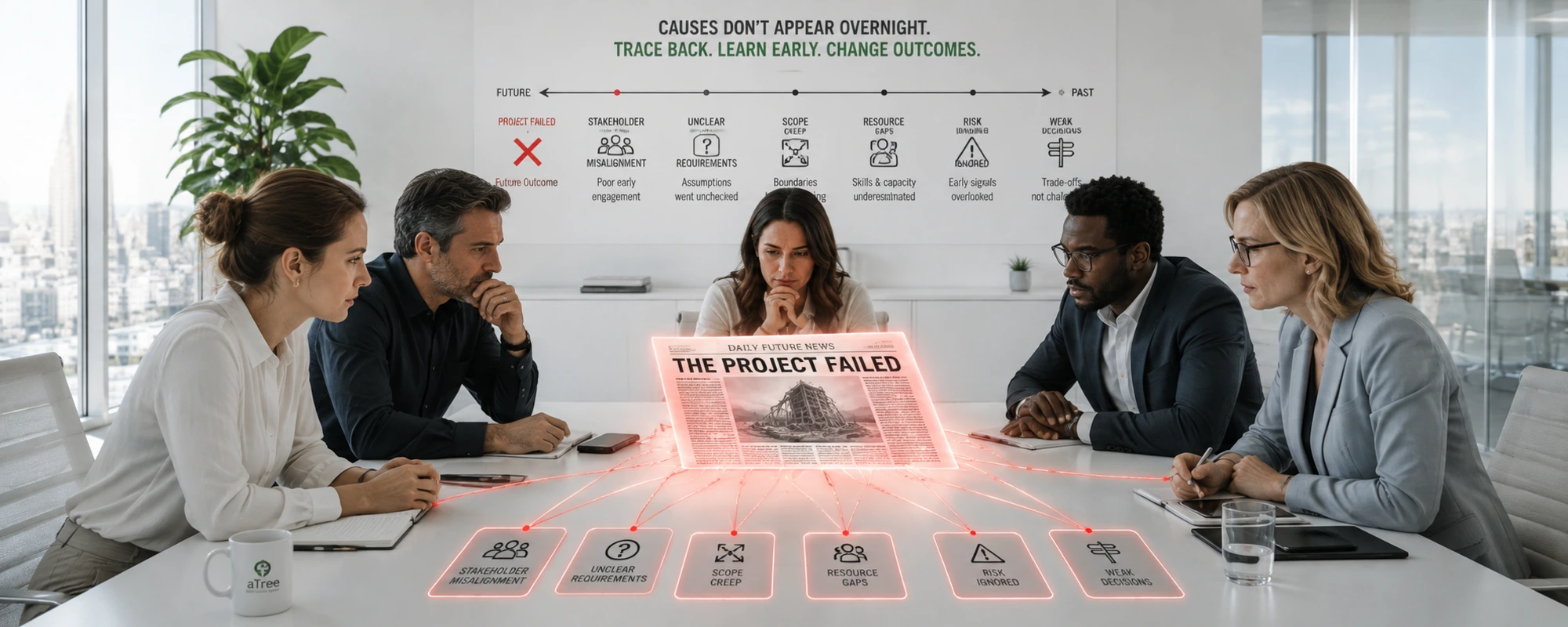
"It's a year from now. This project has failed — completely, embarrassingly. Take five minutes and write down why."
Then everyone reads out their reasons, and you use them to stress-test and strengthen the plan before you commit.
That's it. But the psychology underneath is doing something clever.
Why it works (better than "what could go wrong?")
Researchers call it prospective hindsight. You will often see it credited with a 30% boost to identifying the reasons for an outcome, citing Mitchell, Russo & Pennington (1989) — but that misreads the study, which reported that past-versus-future framing showed little influence and never assessed whether the reasons generated were correct. The honest case for the pre-mortem is not a statistic. It is that imagining a failure that has already happened makes doubt sayable, which is the thing teams are otherwise bad at.
But the deeper magic is social:
- ✓It gives permission to doubt. Normally, raising objections feels like disloyalty or pessimism — so people stay quiet (remember how that ended for Challenger). A pre-mortem reframes doubt as the assignment. The person spotting the flaw is now doing their job, not rocking the boat.
- ✓It defuses groupthink. When the whole team is tasked with finding failure, the quiet skeptic finally has cover to speak — and the confident consensus gets tested before it costs you.
- ✓It beats any one person's blind spots. Each person imagines a different failure. Pooled, they cover risks no single planner would have seen.
How to run one (10 minutes)
The whole exercise fits in a corner of a meeting:
- •1. Do it before the decision is locked — while you can still change course.
- •2. Set the scene: "It's a year out. This failed badly. Why?"
- •3. Write silently first — five minutes, everyone, independently. (Silent-first stops the loudest voice from anchoring the room.)
- •4. Read them all out — no debating yet, just collect.
- •5. Act on the top few: for the most likely failures, change the plan, add a safeguard, or set a trigger to catch them early.
If you want the facilitator's version — timings, prompts, how to handle a room that won't say anything, and what to do with the output — there's a full pre-mortem facilitation guide.
Why it belongs in every important decision
A pre-mortem is a tiny piece of structure that makes a group smarter than it would be on its own. It engineers dissent into the process on purpose — so the doubt that would otherwise stay trapped in someone's head gets said out loud, early, when it's still cheap to act on.
That's the whole theme: good group decisions don't come from smarter people or more confidence. They come from a process that lets the best argument — including "here's how this fails" — actually get heard before you're living the consequences.
Spend ten minutes imagining the disaster. It's the cheapest insurance you'll ever buy.
What's a decision your team is about to commit to — that you've never once sat down and imagined failing? What's the first reason that comes to mind?
Reply and run a one-line pre-mortem in the comments.
Engineer the dissent into the process
Argumentree gives every objection a place to live next to the case for — so the "here's how this fails" argument gets weighed before you commit, not after.
Start Free 14-Day Trial →Related Reading
Pre-Mortem Facilitation Guide
The step-by-step version: timings, prompts, and what to do with what surfaces.
Groupthink and the Challenger Disaster
The failure mode a pre-mortem is designed to break, at its most expensive.
Why Smart Teams Make Dumb Decisions
Why capable people go quiet, and what structure gets them talking again.
How to Avoid Groupthink
The longer treatment — the research, the warning signs, and the countermeasures that hold up.