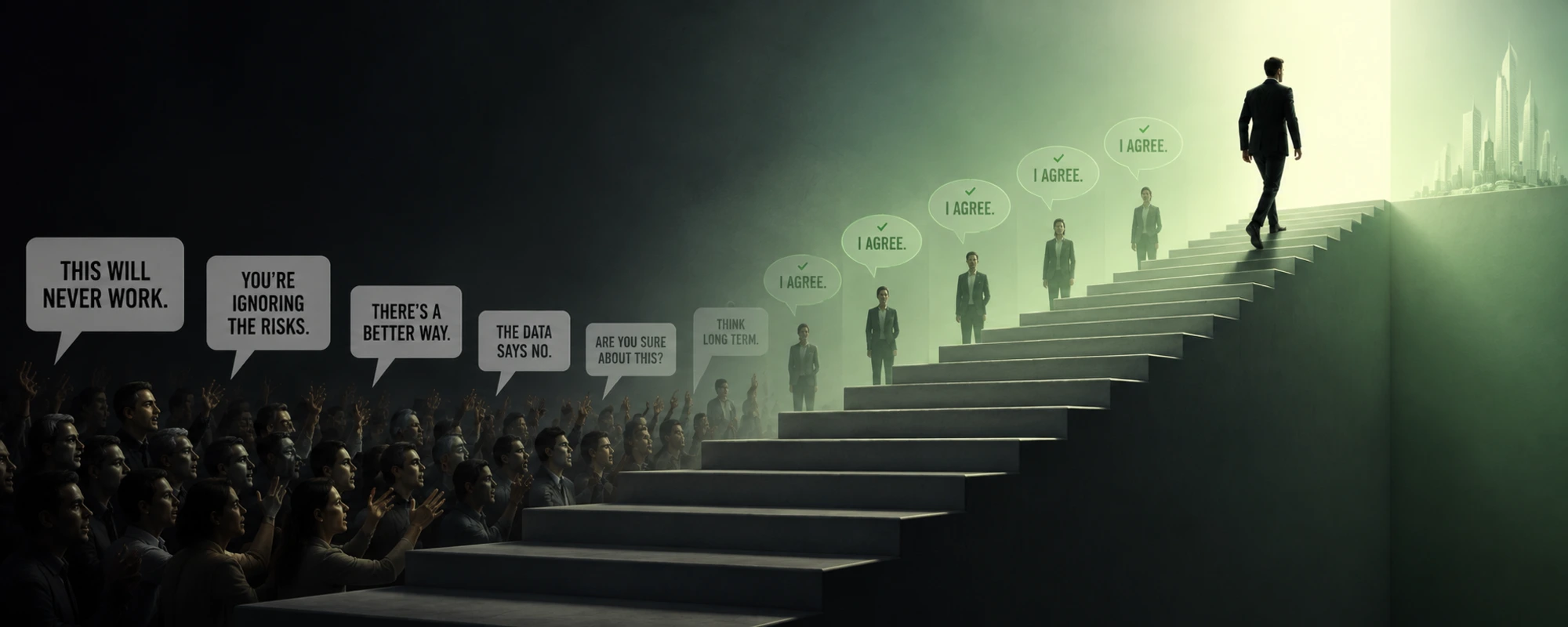
The More Senior You Get, the Less Truth You Hear
Early in a career the feedback is constant: peers push back, bosses correct, and the corrections keep the thinking sharp. After a few promotions the pushback stops, meetings get smoother, people nod more, and your ideas suddenly sound great to everyone — which feels like getting smarter and is actually getting powerful. Disagreement has simply become expensive, and the people around you are doing the maths: you control their raise, their project and their standing, so contradicting you is now a risk with their name on it; senior people radiate certainty, so once you lean a direction the room reads it as settled and falls in line, the Highest Paid Person's Opinion anchoring everything; and nobody wants to be the difficult one, because going along is easy and invisible while pushing back is effortful and memorable. So people edit — softening the bad news, burying the objection, handing over a slightly nicer version of reality — not out of cowardice but as a rational response to the incentives that authority now represents. The result is genuinely dangerous: the more authority you have, the worse your information gets, exactly when your decisions matter most, and you end up mistaking the silence of people who will not disagree for the confidence of people who think you are right. It is the emperor's new clothes replayed in leadership teams everywhere, and it does not fix itself, because the natural drift of power is toward the bubble rather than away from it. The truth has to be engineered back in with structure: reward the person who disagrees, visibly, so everyone sees that pushback is safe rather than career-limiting; ask for the case against an idea before the case for it, and refuse to accept looks good to me; make dissent structural rather than optional by assigning someone to argue the other side, gathering input before revealing your own view, and letting people weigh in anonymously so rank stops deciding; and speak last, because the moment you go first you have anchored the room and the truth gets quieter. The leaders who stay sharp are not the ones with the best instincts. They are the ones who never let their power buy them silence.
The More Senior You Get, the Less Truth You Hear
Power comes with a hidden tax: the people around you quietly stop telling you when you're wrong.
Here's a strange thing that happens as you climb.
Early in your career, people tell you when your idea is bad. Peers push back. Bosses correct you. The feedback is constant, sometimes brutal, and it keeps you sharp.
Then you get promoted. And promoted again. And somewhere along the way, the pushback… stops. Meetings get smoother. People nod more. Your ideas suddenly sound great to everyone.
It feels like you got smarter. You didn't. You got powerful — and power quietly surrounds you with people who've stopped telling you the truth.
Why the truth dries up
It's not that people suddenly respect you more. It's that disagreeing with you got expensive, and they're doing the math:
- ✕You control their outcomes. Their raise, their project, their standing — you touch all of it. Contradicting you is now a risk with their name on it.
- ✕They assume you've decided. Senior people radiate certainty. Once you lean a direction, everyone reads it as settled and falls in line. (This is the HiPPO effect — the Highest Paid Person's Opinion anchors the room. It's the appeal-to-authority trap running silently, without anyone having to invoke rank out loud.)
- ✕Nobody wants to be "the difficult one." Going along is easy and invisible. Pushing back is effortful and memorable — and not in a way that feels safe.
So people edit. They soften the bad news, bury the objection, and hand you a slightly nicer version of reality. Not because they're cowards — because they're responding rationally to the incentives you now represent.
The trap this creates
Put it together and you get something genuinely dangerous: the more authority you have, the worse your information gets — exactly when your decisions matter most.
You end up in a bubble of agreement, mistaking the silence of people-who-won't-disagree for the confidence of people-who-think-you're-right. It's the emperor's new clothes, replayed in every leadership team in the world. The higher you rise, the fewer people are willing to be the child who says the emperor is naked — so you're the last to know.
History is littered with powerful people who walked confidently into disaster, surrounded by advisors who knew better and said nothing.
You have to engineer the truth back in
Here's the hard part: this won't fix itself. Left alone, the natural drift of power is toward the bubble, not away from it. If you want the truth, you have to build systems that drag it back in — because it will not arrive on its own.
That means doing unnatural things on purpose:
- ✓Reward the person who disagrees — visibly, so everyone sees that pushback is safe and valued, not career-limiting.
- ✓Ask for the case against your idea before the case for it — and don't accept "looks good to me."
- ✓Make dissent structural, not optional — assign someone to argue the other side, gather input before you reveal your own view, let people weigh in anonymously so rank stops deciding.
- ✓Speak last. The moment you go first, you've anchored the room and the truth gets quieter.
Notice what all of these have in common: they're structure. You can't rely on courage to surface the dissent, because you've made dissent costly. You have to build a process where the best argument can win even when it contradicts the most powerful person in the room — especially then.
The leaders who stay sharp aren't the ones with the best instincts. They're the ones who never let their power buy them silence.
When did you last hold back a real objection because of who was in the room? And if you're the senior one — when did someone last genuinely tell you that you were wrong?
Reply and tell me. The second question is the more uncomfortable one.
Make the objection safe to say
Argumentree separates the argument from the arguer: positions are laid out and weighed on their merits, so the case against a decision can be made without anyone having to be the difficult one.
Start Free 14-Day Trial →Related Reading
The Loudest Voice Trap
When confidence and rank substitute for argument quality — and what levels the room.
Why Smart Teams Make Dumb Decisions
The group version of the same failure: capable people, silent doubts, a bad call.
How to Avoid Groupthink
The structural countermeasures that actually surface the dissent power suppresses.
How to Disagree Without Destroying Relationships
For the person on the other side of this — pushing back without paying for it.