Every News Article Has an Argument. Most Readers Miss It.
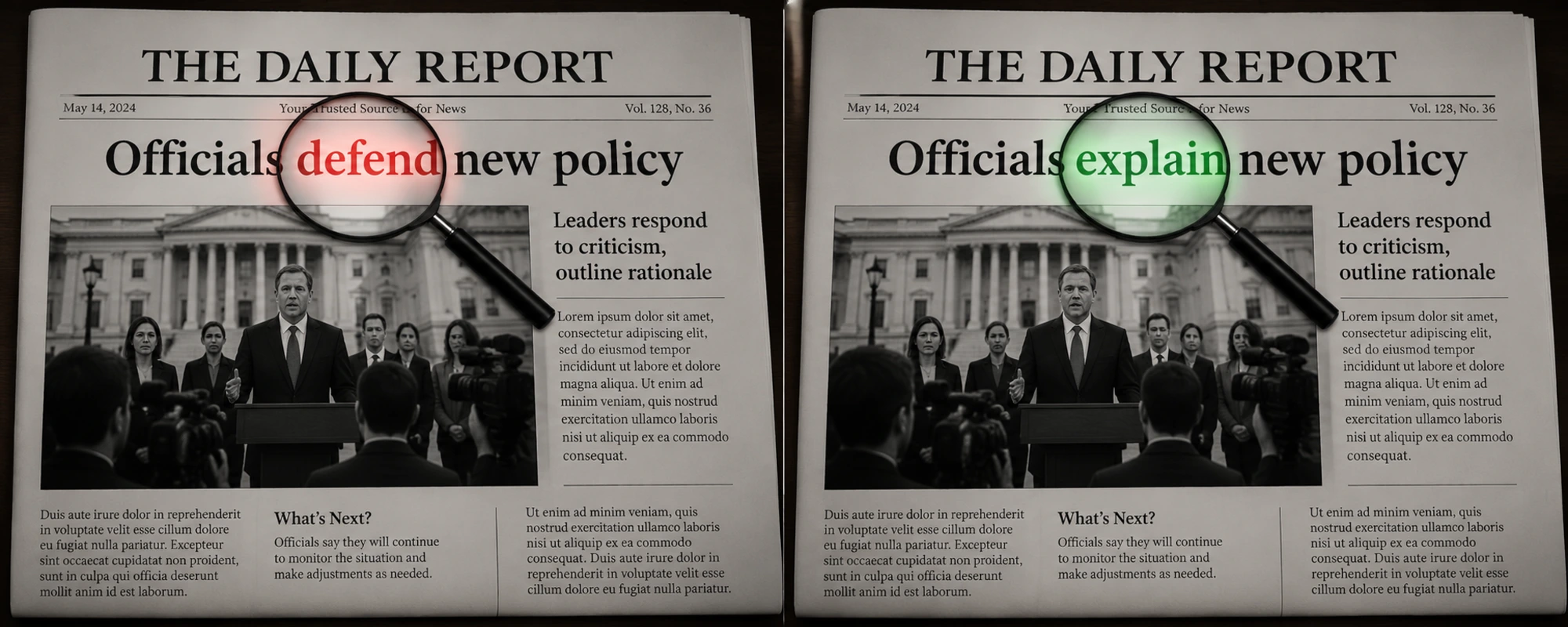
Most news stories are trying to convince you of something, and the argument is usually invisible because it is built into the structure rather than stated outright: the headline, the word choice, which facts were selected and which were left out. Every article makes a case in the same three parts as any argument — the claim is the angle, the evidence is the handful of facts and quotes chosen out of thousands available, and the reasoning is the unspoken bridge explaining why those particular facts should make you feel that particular way. Even a neutral report makes choices about which facts lead and whose quote goes first. The persuasion hides in the moves around the sentences: a headline that says officials defend a controversial plan rather than officials explain a new plan argues the opposite case before you have read a word; loaded verbs like slammed or admitted smuggle in a verdict; a true statistic stripped of its base rate can argue against the full picture; and the most powerful move of all is the counter-evidence that simply is not there, because you cannot object to an argument you never knew was omitted. The defence is one active habit — ask what the piece wants you to believe and whether the argument under it holds — using three questions: what is the plain claim, what evidence is missing, and does the reasoning actually connect rather than merely sit adjacent. That shift takes you from absorbing to evaluating, which matters because you are persuaded all day by people whose job is persuasion, through arguments engineered not to look like arguments.
Every News Article Has an Argument. Most Readers Miss It.
You're being argued with all day long. Here's how to see it — and judge whether the argument actually holds.
You probably read a dozen news stories today. Here's the uncomfortable part: most of them were trying to convince you of something, and you almost certainly didn't notice the argument being made.
Not because you're careless. Because the argument was built into the structure — the headline, the word choice, what got included, what got left out. Good persuasion doesn't announce itself. It feels like "just the facts."
Once you learn to see the argument inside the article, you can never unsee it. And you stop being quietly steered by reasoning you never agreed to.
Every article makes a case
Remember the three parts of an argument — claim, evidence, reasoning? News works the same way, just less visibly:
- •The claim is the angle: the implied "this is good / bad / alarming / overdue."
- •The evidence is the facts and quotes selected — out of the thousands available.
- •The reasoning is the unspoken bridge: why these particular facts should make you feel this particular way.
Even a "neutral" report makes choices. Which facts lead? Whose quote goes first? What context is missing? Each choice is an argument wearing the costume of description.
Where the persuasion actually hides
The argument rarely sits in a sentence you can point to. It lives in the moves around it:
- •The headline. "Officials defend controversial plan" vs "Officials explain new plan" — same event, opposite argument, before you've read a word.
- •Word choice. Slammed. Admitted. Refused to deny. Sources say. Each one smuggles in a verdict.
- •Selection. A true statistic, stripped of its base rate or its trend line, can argue the exact opposite of the full picture.
- •Omission. The most powerful move of all is the counter-evidence that simply isn't there. You can't object to an argument you don't know was left out.
The skill: read like an investigator
You don't need to become cynical about everything. You need one active habit: as you read, ask what the piece wants you to believe — and whether the argument under it actually holds.
Three questions do most of the work:
- •What's the claim? Strip the framing. In one plain sentence, what am I being nudged to conclude?
- •What's the evidence — and what's missing? What would I need to know to judge this fairly that isn't here?
- •Does the reasoning actually connect? Do these facts really support that conclusion, or just sit next to it?
Run that on one article today and you'll feel the difference immediately. You go from absorbing to evaluating — from being argued at to weighing the argument.
Why this matters more than ever
You are persuaded all day, by people whose job is to be persuasive, through arguments engineered to not look like arguments. Multiply that across a feed, a lifetime, an algorithm optimized for outrage, and your view of the world is quietly shaped by reasoning you never consciously checked.
Seeing the structure is the antidote. It's not about distrusting everything — it's about being able to tell a good argument from a well-dressed bad one. Which, in the end, is the whole skill: letting the best argument win, instead of the best-framed one.
Open the last news story you read. In one plain sentence: what was it actually trying to get you to believe — and did the evidence really earn it?
Reply with the headline and your verdict. This gets addictive.
See the argument, not just the article
Argumentree pulls the claims, evidence and reasoning out of a discussion and lays them side by side — so the structure is visible instead of buried.
Start Free 14-Day Trial →Related Reading
Every Argument Has 3 Parts. Most People Only Use 1.
The claim–evidence–reasoning structure this piece applies to the news.
Why the Best Argument Doesn't Always Win
Framing beats substance more often than it should — and why that happens.
What Is Argumentation Theory?
How the field separates a persuasive argument from a genuinely good one.