The Eisenhower Matrix (And When NOT to Use It)
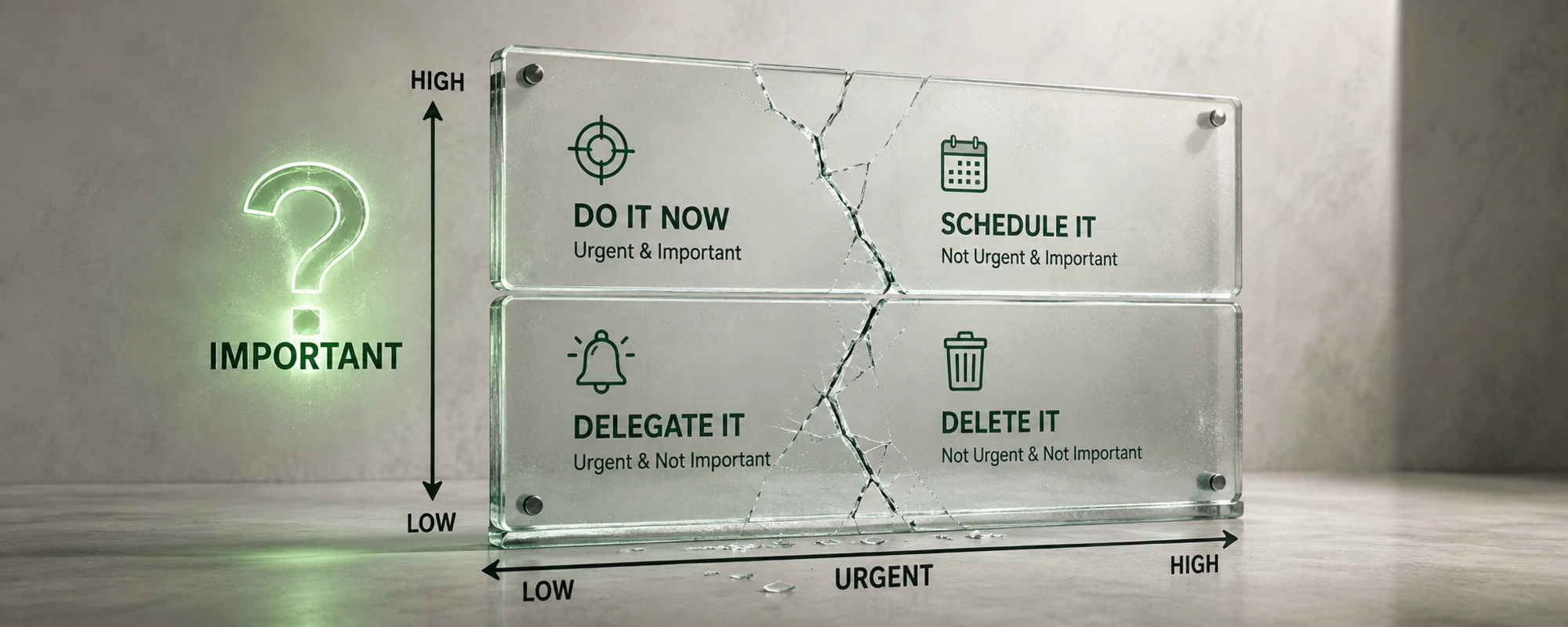
The Eisenhower Matrix sorts every task on two axes, urgent and important, into four boxes: urgent and important gets done now, important but not urgent gets scheduled, urgent but not important gets delegated, and neither gets deleted. The real insight is the second box — strategy, health, relationships and deep work all live in important-but-not-urgent, and it is the first thing a busy life eats because nothing is screaming for it, so if the matrix does one thing for you let it be guarding that box. But the tool breaks down exactly where decisions get hard. It assumes you can classify cleanly, when in real life whether something is important is the whole question and the matrix hands it back unanswered. Important is undefined — important toward what? Without a clear goal the grid simply launders the priorities you already had; it feels like analysis but is really a mirror. It is built for tasks rather than direction, so it is excellent for what to do this afternoon and useless for whether to enter a market. And it can become procrastination in a suit, where twenty minutes of drawing quadrants feels productive without anything being decided. The deeper point is that prioritization tools assume the hard part is ordering your options, when usually the hard part is deciding what matters in the first place — a decision that rarely fits in a two-by-two, and that a team has to argue its way to rather than sort its way to.
The Eisenhower Matrix (And When NOT to Use It)
The famous prioritization grid is genuinely useful. It's also quietly overrated. Here's both halves.
You've probably seen the Eisenhower Matrix. It's one of the most shared productivity tools on the internet, and for good reason — it's simple, memorable, and it works.
It's also misunderstood, overused, and silently unhelpful for the decisions that matter most. So let's do both halves: what it's great at, and where it quietly fails.
(We met it briefly in The Decision Edge — here's the fuller picture.)
The tool, fast
Sort every task on two axes — urgent and important — into four boxes:
- •Urgent + Important → do it now
- •Important + Not Urgent → schedule it
- •Urgent + Not Important → delegate it
- •Not Urgent + Not Important → delete it
The real insight is the second box. Important + Not Urgent — strategy, health, relationships, deep work — is where everything that actually matters lives, and it's the first thing a busy life eats, because nothing is screaming for it. If the matrix does one thing for you, let it be guarding that box.
Where it quietly fails
Here's the part the productivity posts skip. The matrix breaks down exactly where decisions get hard:
- ✕It assumes you can classify cleanly. In real life, "is this important?" is the whole question — and the matrix hands it back to you unanswered. It sorts your priorities; it doesn't tell you what they should be.
- ✕"Important" is undefined. Important toward what? Without a clear goal, the matrix just launders the priorities you already had. It feels like analysis but it's really a mirror.
- ✕It's built for tasks, not direction. It's great at "what should I do this afternoon" and useless for "should we enter this market" — the genuinely hard, high-stakes calls where the options aren't even tasks yet.
- ✕It can become procrastination in a suit. Spend twenty minutes drawing quadrants and you feel productive without having done — or decided — anything.
The deeper point
Prioritization tools all share a hidden assumption: that the hard part is ordering your options. Usually it isn't. The hard part is deciding what matters in the first place — choosing the goal the ordering is supposed to serve.
That decision rarely fits in a 2×2. And when it's a decision a team has to make — which bets matter, which direction to commit to — a personal productivity grid is the wrong instrument entirely. You don't sort your way to a strategy. You argue your way there, weighing the real case for each direction.
So use the Eisenhower Matrix for what it's brilliant at: protecting your important-but-not-urgent time from the tyranny of the urgent. Just don't mistake sorting tasks for the harder, more valuable work of deciding what's worth doing at all — especially together.
What's been stuck in your "important but not urgent" box for months — quietly losing to things that were merely loud?
Reply and name it. Naming it is how it finally gets scheduled.
Sorting isn't deciding
When the question is which direction is worth taking, you need the case for each one laid out — not a grid. That's what Argumentree is for.
Start Free 14-Day Trial →Related Reading
The Simple Frameworks That Make Decision-Making Easier
Where the Eisenhower Matrix first appeared in this series, alongside three other tools.
How to Actually Get Better at Making Decisions
Protecting decision energy, and reducing the volume of calls you make by rule.
The Regret Minimization Framework
The tool for the rare decisions a 2×2 was never going to help with.